
When you move
Arteries widen to working muscles
During exercise, arteries in the muscles you are using dilate to increase blood flow where the demand is. The effect is local and quick — you do not have to train hard for the vessels to react.

Vasculindo · Circulation basics
Circulation is easy to take for granted until something changes. Here is what the vessels actually do, how daily habits reach them, and which signals are worth noticing.
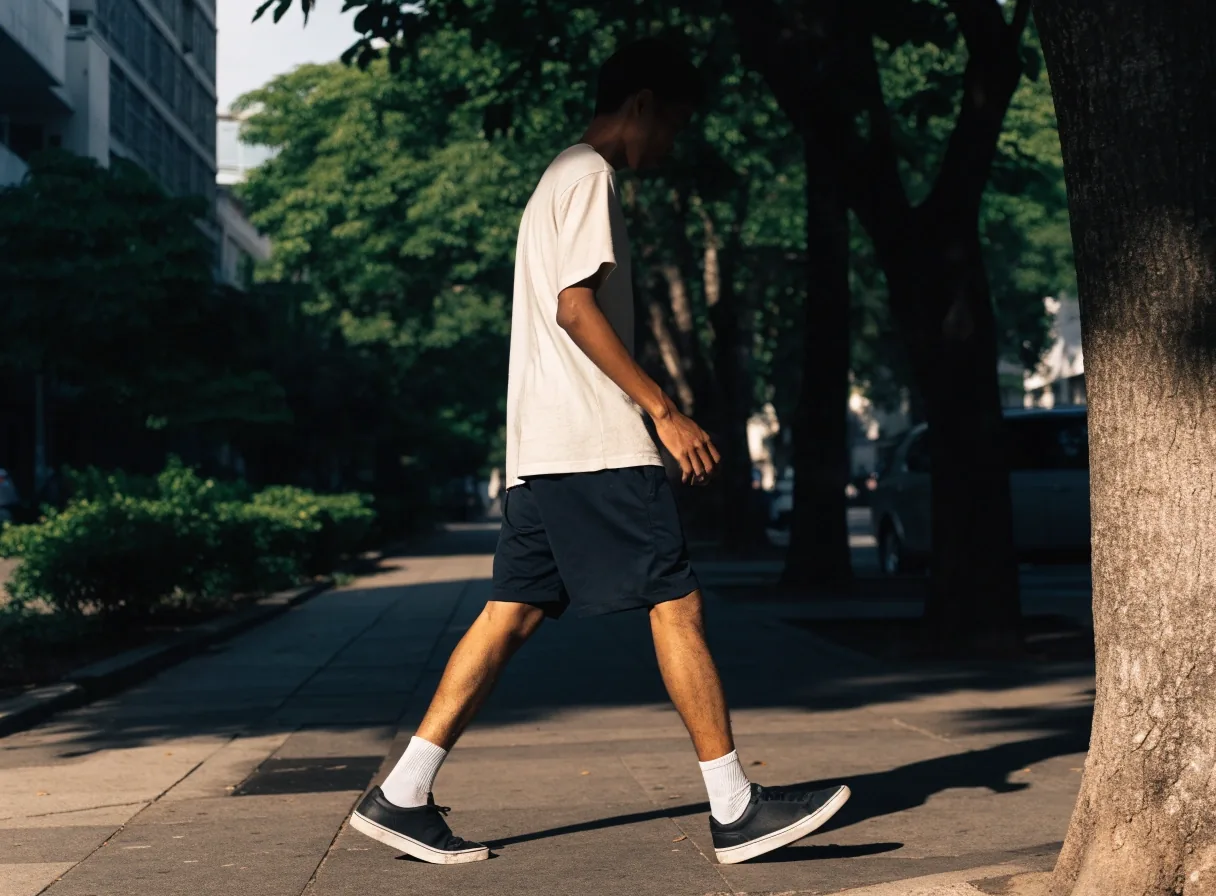
Jakarta · midday walkway · a plain-language page on circulation basics
Signals worth noticingThe system in plain terms
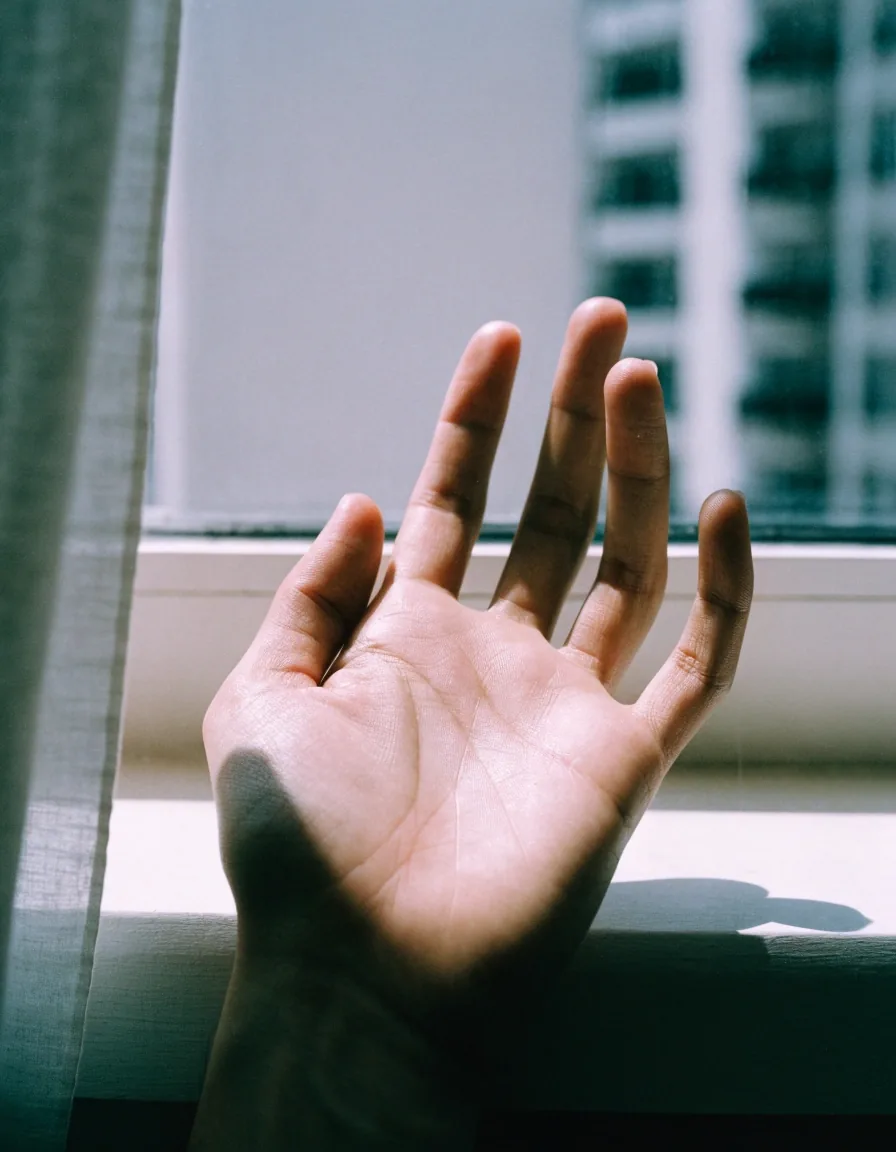
Heart · vessels · blood — three parts, one job
Your circulatory system has three main parts: the heart, the blood vessels, and the blood itself. The heart pumps. The vessels are the delivery network — arteries carry blood away from the heart, veins bring it back, and capillaries connect the two at the tissue level.
An adult's blood vessels, laid end to end, would stretch roughly 100,000 kilometers. That network is not a set of rigid pipes. Vessels are living tissue that widen and narrow constantly in response to what your body is doing — standing up, walking uphill, sleeping, or sitting still through a long afternoon.
Heart
The pump that sets the pressure behind every beat of flow.
Vessels
Arteries out, veins back, capillaries joining them at the tissue.
Blood
The carrier — oxygen, nutrients, and waste moving in one loop.
This responsiveness is sometimes called vascular function or endothelial function. The endothelium is the thin lining inside every vessel. It is not something you feel directly, but it responds to movement, sleep, smoking, and what you eat and drink.
When you move
During exercise, arteries in the muscles you are using dilate to increase blood flow where the demand is. The effect is local and quick — you do not have to train hard for the vessels to react.
When you sit still
Hours in a chair mean less movement in the leg muscles that normally help push blood back toward the heart. Over time, the vessels' ability to respond can decline.
When you sleep
A normal night gives the vessels a window to recover. Short or broken sleep narrows that window, which is one reason sleep keeps appearing in circulation advice.
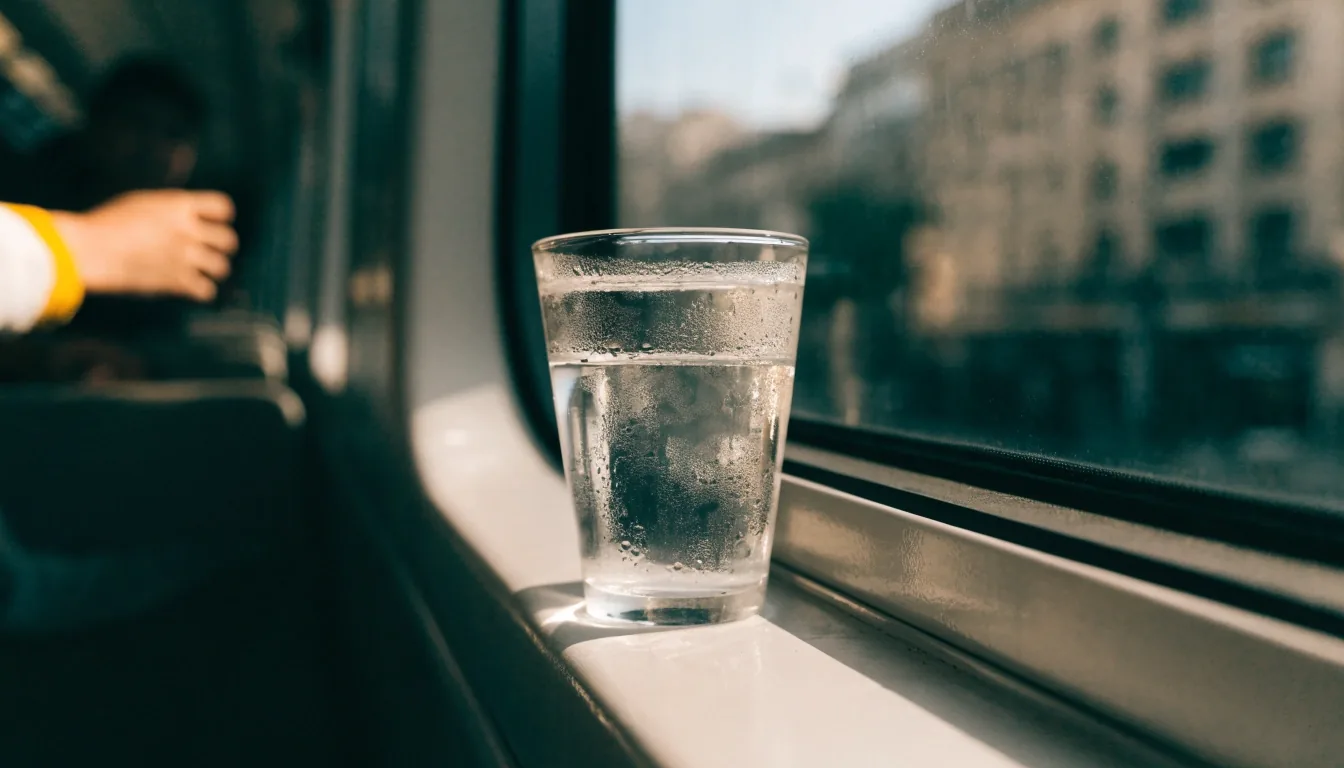
Jakarta · afternoon train · water through the day keeps blood volume steady
The point is not to self-diagnose from a webpage. It is to know which changes are ordinary and which ones mean you should book an appointment.
Common, usually not alarming on its own
Cold hands and feet, occasional swelling after long flights or drives, or feeling lightheaded when standing up quickly.
Worth a medical assessment
Persistent leg pain when walking that eases with rest, swelling that does not go down, or sudden shortness of breath.
Where the page stops
Nothing here replaces a conversation with a doctor who knows your history, your medication, and your family background.
Write it down first
If you decide to book an appointment, note when a symptom started, what you were doing, and how often it happens. That detail helps more than a general description.
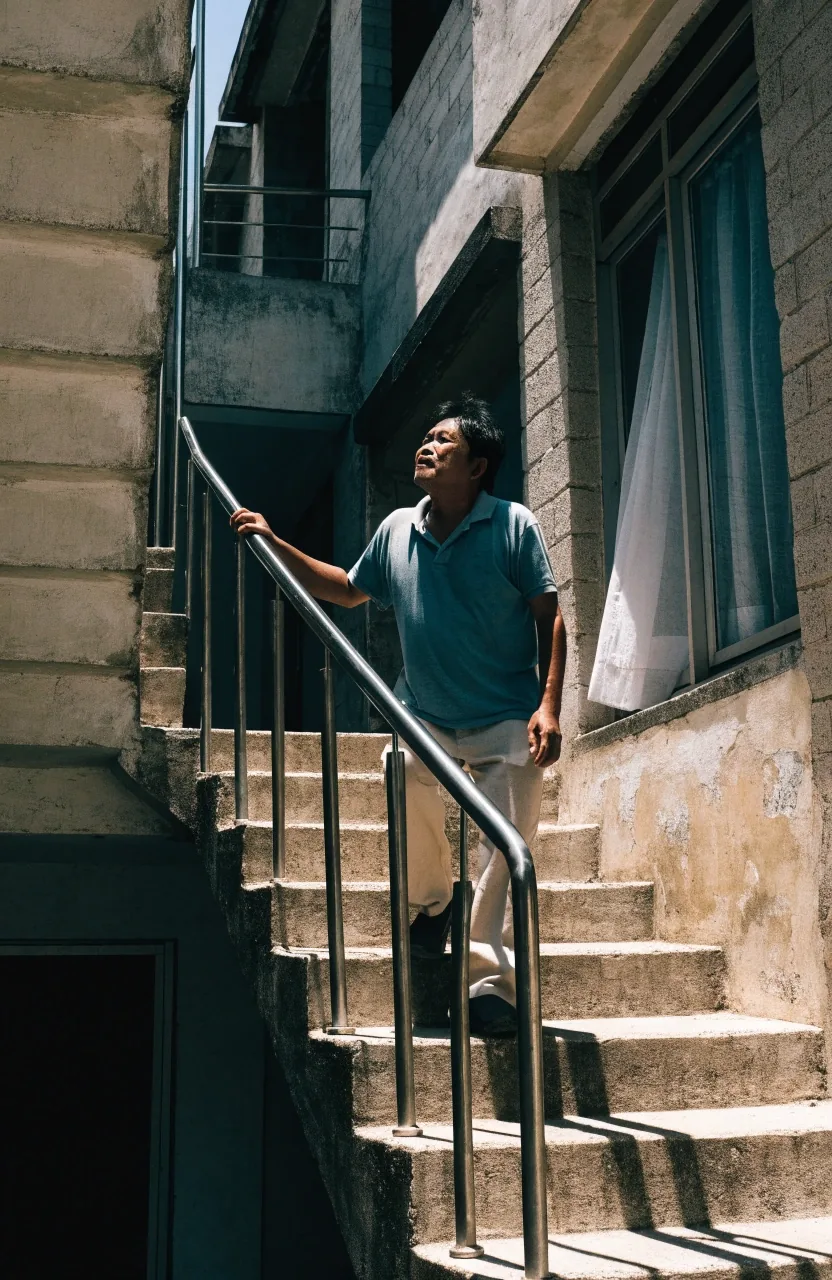
Stairs at noon · a short climb is enough to change leg flow
Arteries stiffen gradually with age, and that stiffening is normal. What varies is how fast it happens. Smoking, long-term inactivity, poorly managed blood pressure, and diabetes all tend to accelerate it. Regular movement and not smoking tend to slow it.
You cannot stop aging. You can influence the pace at which the vascular system changes, and that is the practical reason these daily habits keep coming up in public health guidance.
Tends to speed it up
Smoking, long stretches of inactivity, unmanaged blood pressure, and diabetes.
Tends to slow it down
Regular movement, not smoking, and sleep that gives blood pressure its nightly dip.

Midday bedroom · sleep is the nightly window vessels use to recover
A single salad does not fix a diet, and a single walk does not fix a sedentary week. Circulation responds to patterns, not to isolated good days.
Thirty minutes of brisk walking five days a week, standing up every hour at your desk, and consistent hydration through the day form a routine that supports vascular function over years. The reverse is also true. A habit of sitting for ten hours a day, sleeping five hours, and smoking is a pattern, and patterns compound.
End of movement and routine chapter · daily habit guidance continues below
Four levers, one system
Movement increases blood flow and helps vessels stay responsive. Sleep gives blood pressure a nightly dip. Hydration keeps blood volume at a level the heart can pump efficiently. Avoiding tobacco removes a major source of vessel damage.
These four levers overlap, and that overlap is what makes them useful. Fixing sleep often makes it easier to exercise in the morning. Drinking water through the day makes desk breaks easier to remember. The habits reinforce each other, so improving one usually makes the next one easier.

Where to reach us
Vasculindo
Jl. Jend. Sudirman No. 52, Senayan, Kebayoran Baru, Jakarta Selatan, DKI Jakarta 12190, Indonesia
Monday to Friday, 9:00 AM – 6:00 PM
+62 21 5299 7315 · [email protected]
Contact VasculindoVasculindo focuses on the everyday, non-clinical side of circulation: movement, sitting time, hydration, sleep, and avoiding tobacco. We do not cover medications, procedures, or specific medical conditions in depth.
The reason is simple. Public health guidance from organizations such as the Singapore Health Promotion Board and the UK National Health Service consistently points to daily habits as the highest-leverage area for most adults — the part of the picture where small changes still add up over years.
That is also why this page stays in plain language. Circulation basics are useful background, but the real work happens in the routine you can actually keep: a walk you take most days, a glass of water you refill without thinking, a bedtime you respect more often than not.
Mostly no. Endothelial function is not something you sense directly. What you notice instead are the effects: warmer hands after a walk, less heaviness in the legs after a day of moving around rather than sitting, easier breathing on stairs.
Thirty minutes of brisk walking on five days a week is the routine most often mentioned in public guidance. It does not have to happen in one block. Three ten-minute walks do the same job for the vessels, and they are usually easier to fit around a Jakarta commute.
Hydration keeps blood volume at a level the heart can pump efficiently. It is not a treatment for a vascular condition, and more is not automatically better — steady intake through the day matters more than a large amount at one time.
No. It is background reading on circulation basics. If you have a symptom that worries you, or a condition you are already managing, a doctor who knows your history is the right person to ask.
If you want a weekly movement plan, the Movement & Exercise page walks through walking, cycling, and dancing as accessible options. If you sit for work, Desk & Commute Routines has practical fixes. Daily Habits & Circulation covers hydration, sleep, and tobacco in more detail. Understanding Circulation is meant as background, not a substitute for a conversation with your doctor.
Vasculindo · circulation basics · updated for 2026